Chlorine Bleach-Free Cleaning: Why It's Time to Rethink What "Clean" Really Means

Chlorine Bleach-Free Cleaning: Why It's Time to Rethink What "Clean" Really Means

For generations, we've been taught that the strongest-smelling cleaner must be the most effective.

We’re programmed to believe that a sharp chlorine scent means "clean." White, bleach-scented bathrooms convey sanitization. Laundry isn't truly fresh unless it's been bleached. And when something feels especially dirty, many people instinctively reach for the bottle with the warning label.

But that belief is rooted more in decades of marketing than modern cleaning science.

The truth is that chlorine bleach is no longer the gold standard it was once considered to be. While it certainly has its place in specific disinfection settings, it's often used far more broadly than necessary in everyday homes.

Today, advances in green chemistry and biotechnology have created cleaning technologies that target dirt, stains, and odors far more intelligently — without relying on unnecessarily harsh ingredients.

At Dirty Labs, we've spent years developing enzyme-powered formulas that work with biology instead of against it. The result is powerful cleaning performance that doesn't require chlorine bleach to get the job done.

Bottle of chlorine bleach with rubber gloves against a blue wall

What Is Chlorine Bleach?

Chlorine bleach is typically made with sodium hypochlorite, a highly reactive chemical that works by oxidizing organic materials.

In simple terms, it attacks the chemical structure of food stains, pigments, bacteria, and certain types of organic matter, breaking them apart through an aggressive chemical reaction.

This makes bleach effective at whitening fabrics and disinfecting hard surfaces.

But oxidation isn't selective — the same chemistry that breaks down stains can also damage fabrics, degrade surfaces over time, irritate skin, and produce harsh fumes — especially when mixed with other household cleaners.

It's powerful chemistry. In fact, it’s often more chemistry than the job actually requires.

Is Chlorine Bleach Necessary for Everyday Cleaning?

In most cases, no.

Many household messes aren't problems that require oxidation — they simply need the right cleaning technology.

Common bathroom buildup includes:

• Soap scum
• Body oils
• Biofilm
• Organic residue
• Hard water deposits
• Mineral buildup
• Everyday stains
• Odor-causing bacteria

These are all different types of soils.

Treating every one of them with chlorine bleach is a bit like using a sledgehammer to hang a picture frame.

Modern cleaning science allows us to be much more precise.

Rather than chemically destroying everything in its path, enzymes are designed to break apart specific types of organic soils, making them easy to rinse away without the collateral damage.

The Hidden Downsides of Chlorine Bleach

Bleach has become so common that many people rarely stop to consider its drawbacks.

Harsh on People

Chlorine bleach can:

• Irritate skin and eyes
• Produce strong fumes that may bother sensitive individuals
• Trigger respiratory discomfort in poorly ventilated spaces
• Damage clothing through accidental splashes

For households with children, pets, or anyone sensitive to strong chemicals, minimizing unnecessary bleach use can create a more pleasant cleaning experience.

Harsh on Surfaces

Repeated bleach exposure can contribute to:

• Fading surfaces
• Damaging grout over time
• Corroding certain metals
• Weakening some materials with repeated exposure

Cleaning shouldn't shorten the lifespan of the things you're trying to maintain.

It Doesn't Actually Remove Dirt

This surprises many people.

Bleach disinfects — but it isn't particularly good at cleaning on its own.

It doesn't dissolve grease, break down proteins efficiently, or lift away food residue.

That's why many conventional cleaning products combine bleach with detergents or surfactants to actually remove soil.

In other words, bleach often isn't doing all the work people think it is.

white toilet with picture frame on ledge and flowers

Why Enzymes Are a Smarter Way to Clean

Enzymes work completely differently.

Instead of aggressively oxidizing everything they touch, enzymes act like highly specialized biological tools.

Different enzymes target different types of messes:

• Proteins
• Starches
• Fats and oils
• Organic residues
• Biofilms that contribute to persistent odors and buildup

Rather than masking the problem, enzymes break these soils into smaller molecules that can be washed away.

It's targeted cleaning rather than brute-force chemistry.

That means excellent cleaning performance with far less unnecessary chemical intensity.

What Makes Dirty Labs Different?

At Dirty Labs, we believe high performance shouldn't require harsh chemistry.

That's why we've spent years developing our proprietary Phytolase® enzyme technology — one of the most advanced bioenzyme systems available in home cleaning.

Instead of relying on chlorine bleach, our formulas use carefully selected enzymes and thoughtfully engineered ingredients that target the mess itself.

The result is cleaning that's:

• Tough on stains and organic buildup
• Effective against stubborn bathroom soils
• Lower in unnecessary harsh chemicals
• Designed with both performance and material compatibility in mind

It's a fundamentally different philosophy.

Rather than overpowering dirt with aggressive oxidizers, we remove it through smarter chemistry.

What Does This Mean For the Bathroom?

The toilet is one of the last places many people imagine cleaning without bleach, but it's also one of the places where enzymes work especially well.

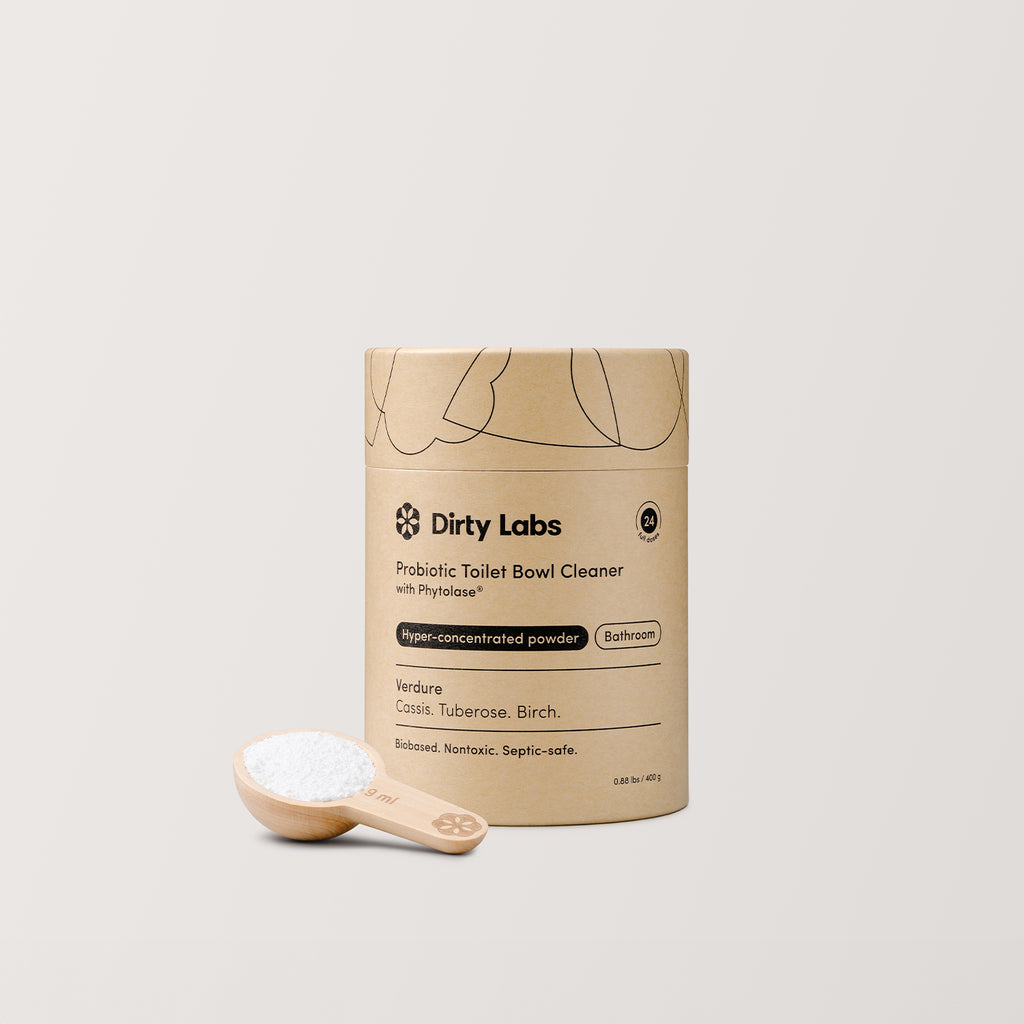
Dirty Labs' Probiotic Toilet Bowl Cleaner combines advanced enzyme technology with probiotics that continue working after you flush.

Instead of simply whitening the bowl with chlorine bleach, the formula helps break down the organic buildup that contributes to stains and odors over time.

That means it actively targets the source of the mess — not just the symptoms.

Our formula helps:

• Break down organic buildup
• Reduce odor-causing residue
• Leave bowls visibly clean
• Clean without chlorine bleach
• Deliver a fresh, botanical fragrance instead of overpowering chemical fumes
• Continue to keep the toilet bowl fresh between cleanings

It's a smarter approach to one of the dirtiest jobs in the house.

Dirty Labs toilet bowl cleaner on top of toilet close up

Does Bleach Kill the Good Bacteria in Septic Systems?

For households with septic systems, this question matters.

Large or frequent amounts of chlorine bleach can disrupt the beneficial bacteria that help septic systems function properly.

While occasional household use is generally manageable, many homeowners prefer cleaning products that support — not constantly challenge — the biological balance their septic system depends on.

Enzyme- and probiotic-powered cleaners align naturally with that approach by working with biological processes rather than relying on aggressive disinfectants.

Chlorine Bleach vs. Enzyme Cleaning

Chlorine Bleach

• Oxidizes organic matter
• Strong chemical odor
• Can irritate skin and airways
• Can damage some surfaces over time
• Doesn't remove grease effectively on its own
• Uses aggressive chemistry

Enzyme Cleaning

• Breaks down specific soils biologically
• Light, modern fragrances or fragrance-free options
• Designed for everyday home use
• Gentler on many household materials
• Targets oils, proteins, starches, and organic buildup
• Uses targeted biological chemistry

close up of powder toilet bowl cleaner in wooden scoop

The Future of Cleaning Isn't Harsher. It's Smarter.

For decades, stronger chemicals were seen as the only path to a truly clean home. But we know today you don’t need chlorine bleach to achieve exceptional cleaning performance.Instead, you need chemistry that's designed for the job.

At Dirty Labs, we're proving that advanced enzyme technology can outperform outdated assumptions about what "clean" has to smell like or feel like.

The future of cleaning isn't about adding harsher chemicals — it's about using smarter technology to remove unnecessary ones.

FAQs