Why Fabric Softener Is Especially Bad for Performance Wear
Performance fabrics are engineered with extremely specific functionality. Moisture-wicking fibers pull sweat away from the skin through capillary action. Breathable textiles rely on microscopic spacing between fibers to regulate airflow. Stretch fabrics depend on elasticity to maintain shape and recovery.
Fabric softener interferes with all of that.
When conditioning agents accumulate on technical fabrics, they can clog the spaces that allow moisture and heat to move efficiently. Instead of sweat evaporating properly, it becomes trapped alongside residue left behind from repeated washing. That combination can create an environment where odor-causing bacteria thrive, making smells increasingly difficult to remove over time.
This is one of the reasons people experience "permastank" in gym clothes: the issue often isn't sweat itself. It's years of buildup from detergent residue, body oils, and fabric softener coatings accumulating deep within synthetic fibers.
Heat makes the situation worse. High dryer temperatures can effectively bake residues into fabric over time, especially in polyester-heavy activewear.
If you've ever noticed leggings that suddenly hold onto odor no matter how often you wash them, fabric softeners and dryer sheets are often part of the story.
Why Dirty Labs Will Never Make Fabric Softener
We formulate products around fabric health and long-term performance, not sensory shortcuts.
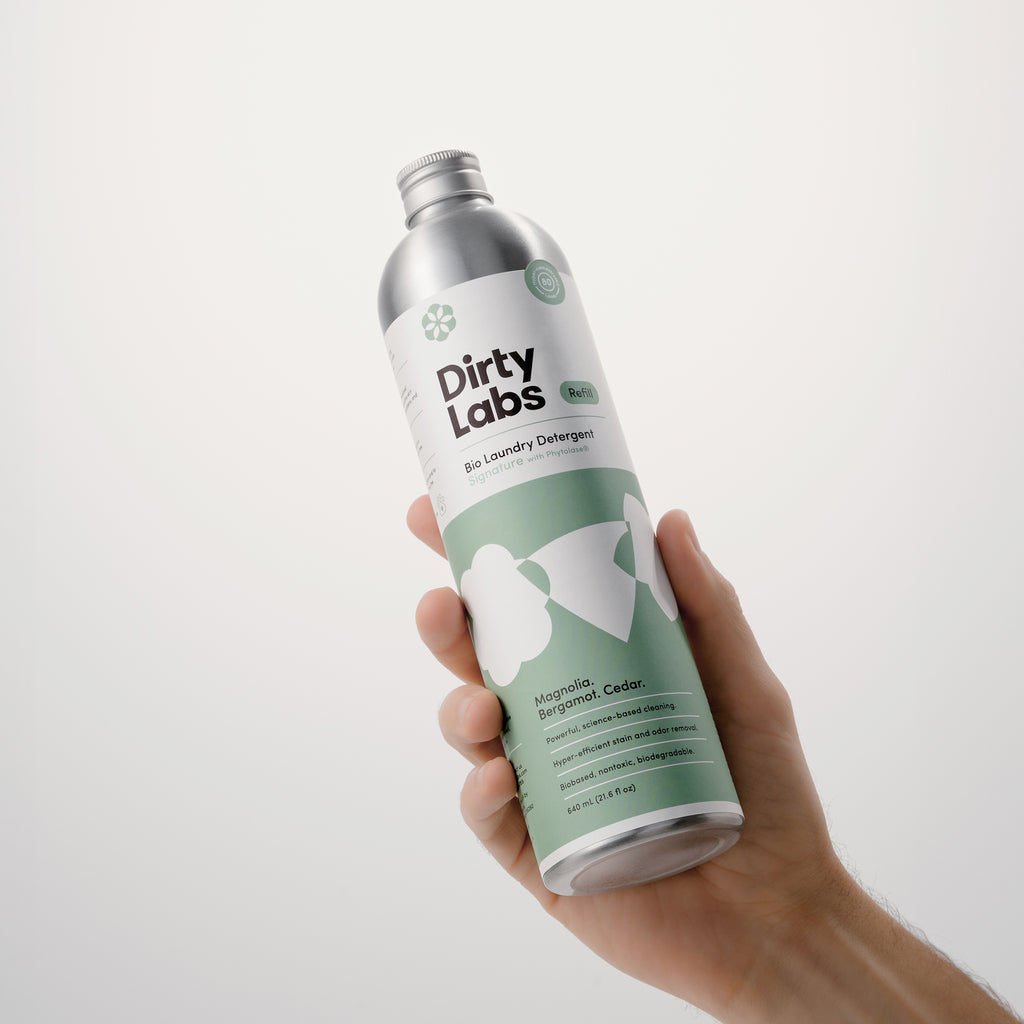
Our bioenzyme-driven formulas are designed to remove soils, sweat, oils, and odor at the source without leaving behind heavy residues that interfere with fabric function. The goal is clean fabric, not coated fabric.
A towel should absorb water because its fibers are clean and structurally intact — not because it's been artificially conditioned. Activewear should wick moisture because the textile itself still functions properly. Sheets should feel soft because residue has been thoroughly rinsed away, not because they've been layered in fragrance and conditioning agents.
From a materials science perspective, coating fabrics in substances designed to remain behind after washing runs counter to what good textile care should accomplish.
We also take a broader environmental view. Many conventional softeners and dryer sheets rely on ingredients that are petrochemical-derived, slow to biodegrade, or potentially harmful to aquatic ecosystems. The category itself is built around disposable sensory enhancement rather than functional cleaning performance.
We don't believe adding unnecessary coatings to fabrics aligns with how modern laundry care should work. Especially not when today's wardrobes increasingly rely on technical textiles, stretch fabrics, moisture-wicking materials, and delicate blends that perform best when they're simply kept clean.