

Your Ultimate Nontoxic Spring Cleaning Guide


Spring cleaning season is here. It’s time to switch to nontoxic cleaners, once and for all.
It’s finally getting (slightly!) warmer, and the itch to refresh your home for the impending summer season is strong. If you haven’t already, now is the perfect time to make your home cleaner (yes, actually), safer, and more sustainable by leaving the toxic chemicals that have been hiding in the cabinet under your kitchen sink where they belong—in years past.
Going non-toxic has historically meant compromising performance. That’s why Dirty Labs was created—to innovate using green chemistry so that the sustainable, nontoxic switch is also a performance upgrade. We make home cleaning formulas that are cleaner in every sense of the word.
We’re living through what industry experts are calling the “transparency revolution” in home care. Consumers want to know what’s in their products, where ingredients come from, whether formulas are safe for their families, and how those products impact the planet.
We were those consumers once too, so transparency has always been foundational for Dirty Labs. With the start of a new year, now is the perfect time to rethink your home cleaning routine, ingredients and all. Here is a guide to how.
Laundry Room: Ditch Plastic Jugs. Upgrade Your Formulation.
Spring cleaning starts with your laundry routine — where residue, fragrance buildup, and harsh surfactants can linger on the fabrics you wear every day.
Ditch This:
Bulky plastic jugs filled with petroleum-based surfactants, synthetic fragrances, and unnecessary fillers. Most conventional laundry detergents rely on petrochemicals to lift stains. While effective, they often contain harsh ingredients that can irritate sensitive skin and contribute to plastic waste.
Try This Instead:
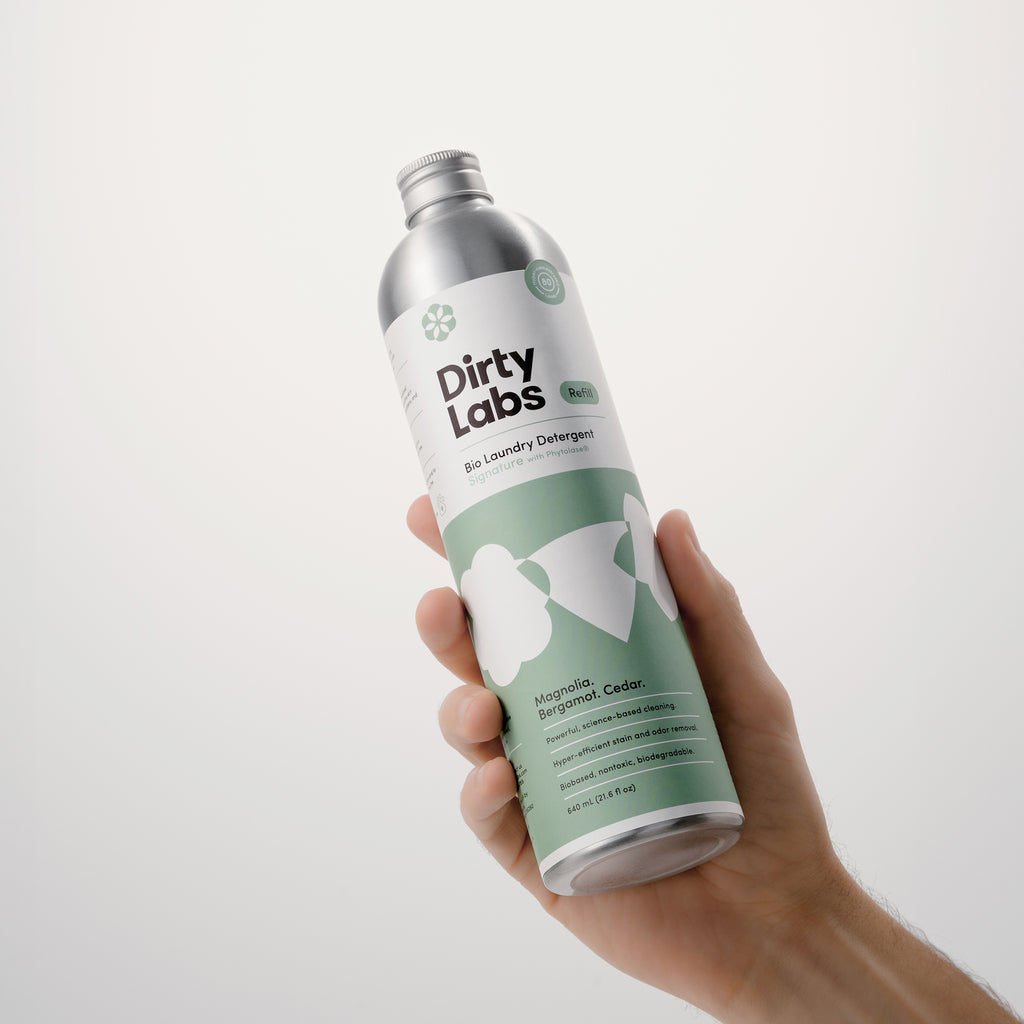
A hyper-concentrated, biobased laundry detergent powered by enzyme technology.
Dirty Labs’ Bio Enzyme Laundry Detergents use advanced biobased ingredients and proprietary enzyme-driven cleaning technology to break down stains at the molecular level — without relying on petroleum-derived surfactants. Because the formula is hyper-concentrated, you get powerful cleaning performance with less product and less plastic.
All formulas are designed to be safe for all skin types. For extremely sensitive skin and babies, Free & Clear (unscented) and Hand Wash & Delicates are EWG Verified® and NEA-recognized, making them ideal options for anyone searching for a non-toxic detergent for sensitive skin.
Ditch This:
Using extra detergent to tackle pit stains, sweat odors, and dingy whites. Adding more detergent doesn’t necessarily mean a deeper clean. It often leads to buildup and residue on fabrics.
Try This Instead:
An enzyme-powered laundry booster designed to target biological stains at the source. Dirty Labs’ Bio Enzyme Laundry Booster is a concentrated powder formula formulated to combat sweat stains, pit stains, biological stains, and malodors. It includes an added enzyme, DNase, which helps break down odor-causing organic matter. The result is whiter whites, brighter brights, and a deeper clean — without chlorine bleach or synthetic optical brighteners.

Kitchen: Clean Without Microplastics
We eat off of our plates and drink out of our cups every single day — the kitchen where ingredient transparency matters most.
Ditch This:
Dish soaps with harsh degreasers, synthetic dyes, and heavy fragrance. Dishwasher pods wrapped in polyvinyl alcohol (PVA). Many conventional dishwasher pods use PVA, a water-soluble plastic that can break down into nano- and microplastics in waterways. Combined with synthetic additives, these formulas can introduce unnecessary environmental impact into your daily routine.
Try This Instead:
An enzyme-powered dishwasher detergent formulated without microplastics. Dirty Labs’ Bio Enzyme Dishwasher Detergent & Booster is an ultra-concentrated 2-in-1 powder designed to break down stuck-on food using advanced enzymes — not harsh chemicals. It’s optimized for cold water cycles, helping reduce energy use while delivering a high-performance clean. For handwashing, Dirty Labs’ Liquid Dish Soap cuts grease efficiently so you can scrub less. It’s packaged in endlessly recyclable aluminum, while the dishwasher detergent comes in recyclable cardboard — helping reduce single-use plastic in your kitchen.
Bathroom: Let Probiotics Do the Cleaning
Bathroom cleaners are often some of the harshest products in the home. Our formulas have proven that you don’t need harmful bleach to make your bathroom sparkling clean.
Ditch This:
Bleach-heavy toilet cleaners and ammonia-based sprays. Chlorine bleach and harsh disinfectants may deliver an immediate visual clean, but they can be irritating to skin and lungs and often require repeated applications.
Try This Instead:
A probiotic toilet bowl cleaner that works continuously. Dirty Labs’ Probiotic Toilet Bowl Cleaner with Phytolase® takes a biology-first approach. Instead of relying on chlorine bleach and fillers, it uses probiotics that act as continuous enzyme producers — helping break down buildup between cleanings for longer-lasting results.It’s a smarter, non-toxic bathroom cleaning solution designed to work with biology, not against it.
Ingredients to Avoid in Cleaning Products
Going nontoxic starts with knowing what’s in your cleaning products — and what shouldn’t be. Many conventional formulas rely on ingredients linked to skin irritation, hormone disruption, environmental harm, or unnecessary filler.
Here are common cleaning product ingredients to avoid — and why you won’t find them in Dirty Labs formulas:
Borax
Often marketed as “natural,” borax is classified in the EU as a substance of very high concern due to potential links to reproductive toxicity, organ system damage, and harm to unborn children.
BPA (Bisphenol A)
An endocrine disruptor associated with risks to pregnancy and childhood development. BPA can also enter waterways through wastewater and negatively impact aquatic life.
Chlorine Bleach (Sodium Hypochlorite)
A strong skin and eye irritant that can be dangerous if ingested. Bleach can weaken fabric fibers over time and contribute to the formation of toxic chlorinated compounds in aquatic ecosystems.
Dyes
Added purely for appearance, dyes provide no cleaning benefit. Some dyes have been associated with cancer risk, endocrine disruption, and can trigger irritation in sensitive individuals.
Hidden Fragrance Ingredients
When brands don’t disclose what’s in their fragrance blends, it’s often because they contain dozens — sometimes hundreds — of undisclosed chemicals. Many are associated with allergies, irritation, and hormone disruption.
Optical Brighteners
These chemicals coat fabrics with light-reflecting particles to make clothes appear whiter and brighter. They don’t actually clean. Some are known skin irritants and may be toxic or bioaccumulative in waterways.
Phosphates
Common in older detergent formulas, phosphates contribute to water pollution and can disrupt aquatic ecosystems by promoting harmful algae blooms.
Phthalates
A class of chemicals linked to endocrine disruption, asthma, allergies, and increased cancer risk. Often hidden within “fragrance.”
Sulfates (SLS, SLES) & Ethoxylated Surfactants (PEGs, Laureth-6/7)
Sulfate-based surfactants can be harsh on skin and fabrics. Ethoxylated surfactants may contain trace contaminants such as 1,4-dioxane and ethylene oxide, both classified as probable carcinogens.
Synthetic Preservatives (MIT, BIT, Parabens)
Used to prevent microbial growth, but some — including MIT and BIT — have been linked to neurotoxicity concerns. Parabens are classified in the EU as endocrine disruptors due to potential links to hormone disruption and reproductive health risks.
1,4-Dioxane
A probable carcinogen created as a manufacturing byproduct. It’s rarely listed on labels but can contaminate products made with ethoxylated ingredients like SLES and PEGs.
At Dirty Labs, we formulate without these ingredients — prioritizing biobased chemistry, enzyme-driven cleaning, and full transparency.
View our complete Dirty Labs “No” List here.
Non-Toxic Cleaning FAQs




Read more


10/05/26 Home & Laundry Tips & Tricks
How Much Laundry Detergent Do You Really Need? Why More Isn’t Always Better
If you’ve ever looked at a small dose of laundry detergent and wondered, Is that really enough t...


09/21/26 Home & Laundry Tips & Tricks
College Laundry 101: How to Do Laundry for the First Time
Getting settled on campus is an exciting time in anyone's life, but one of the biggest tasks to ...


09/09/26 Safety & Sustainability
Chlorine Bleach-Free Cleaning: Why It's Time to Rethink What "Clean" Really Means
For generations, we've been taught that the strongest-smelling cleaner must be the most effective...