3 Stains to Never Wash in Hot Water

3 Stains to Never Wash in Hot Water

If you’ve ever tossed a stained shirt into a hot wash hoping the stain would “melt away,” only to pull it out worse than before, you’re not imagining things. When it comes to stain removal, hot water isn’t always your friend. In fact, for some of the most common household stains, heat can make things dramatically worse.

That’s because certain stains are prone to oxidation: a chemical reaction where compounds in the stain interact with oxygen and become more deeply bonded to fabric over time. Heat accelerates that process. The hotter the water, the faster those stain molecules can react, darken, and permanently set into fibers.

This is especially true for stains like blood, chocolate, and red wine. While these stains are all chemically different, they share one important trait: exposure to heat can make them much harder to remove. Instead of lifting the stain, hot water can essentially “bond” it into the fabric.

The good news: treating oxidizing stains with cold water and the right enzyme-powered formulas can help break them down before they have the chance to set.

Why Hot Water Sets Some Stains

Heat changes chemistry. In laundry, that can be helpful for activating enzymes and cleaning agents,  breaking down oils, and sanitizing fabrics, but it can also permanently set certain compounds into fibers.

Blood contains proteins that coagulate with heat. Red wine contains tannins and pigments that oxidize and bond more deeply into fabric. Chocolate is deceptively complicated: it’s a mix of proteins, fats, sugars, and tannins, which means hot water can bind parts of the stain while spreading the oily components further into the fabric.

In plain English: hot water can turn a removable stain into a bonded pair.

Child with a scraped arm showing a red mark on a plain background

1. Blood Stains

Blood is probably the most infamous “don’t use hot water” stain for a reason. Blood contains proteins that denature when exposed to heat, essentially causing the stain to bond to the fabric.

That’s why fresh blood stains are almost always easier to remove with cold water first.

What To Do Instead

• Rinse the stain immediately with cold water
• Blot — don’t scrub
• Pretreat with an enzyme detergent and oxygen bleach
• Wash cold or cool until the stain is fully gone
• Never machine dry until you confirm the stain has disappeared

Enzymes are especially effective here because they break down protein-based stains at the molecular level.

Dirty Labs Tip

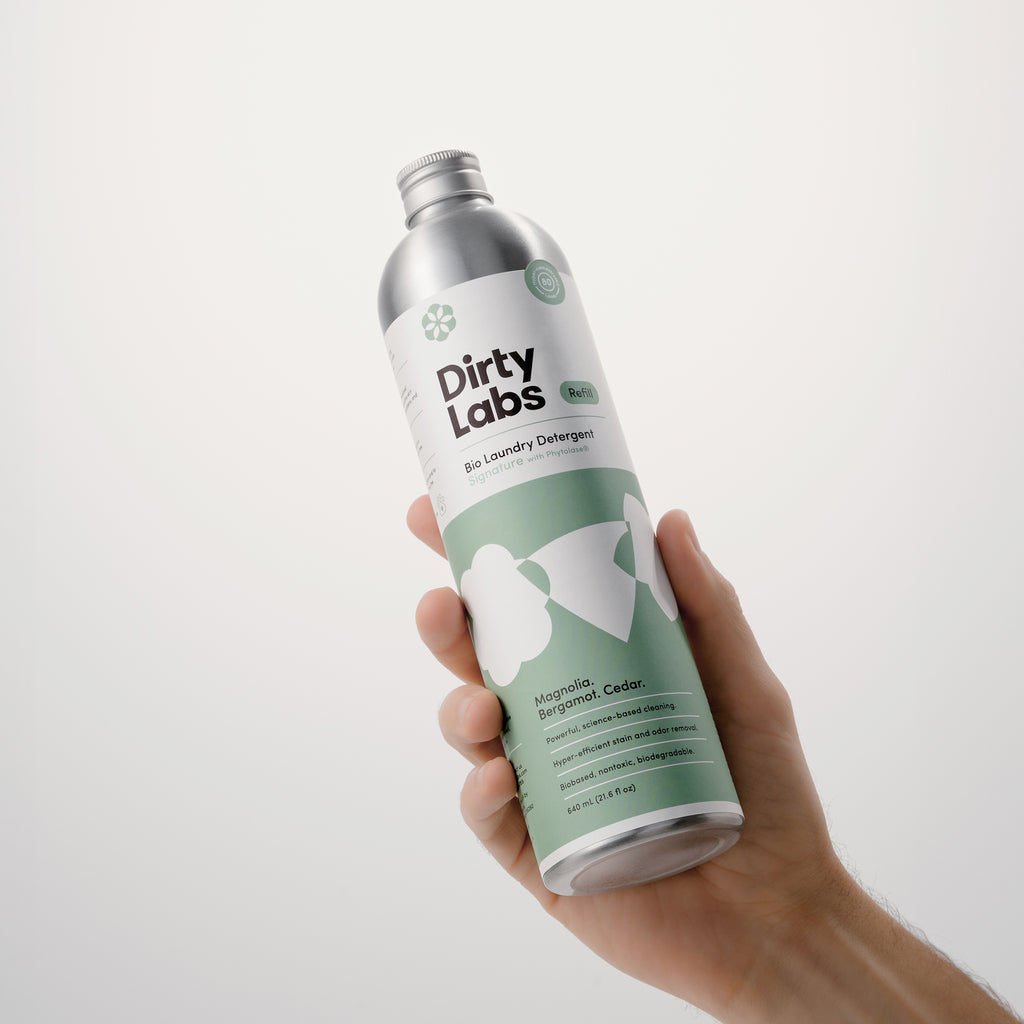
Our Bio Enzyme Laundry Detergent and Bio Enzyme Laundry Booster are designed specifically to target biological stains like blood, sweat, and body oils without relying on harsh chemistry. The key is giving the enzymes time to work before exposing the garment to heat.

White fabric with chocolate stains on a dark background

2. Chocolate Stains

Chocolate stains are sneaky because they’re actually multiple stains at once.

You’re dealing with:

• Cocoa tannins
• Oils and fats
• Sugar
• Sometimes dairy proteins

Hot water can melt and spread the oily components while simultaneously helping tannins bind deeper into fabric.

What To Do Instead

• Scrape off excess chocolate first
• Flush the stain with cold water from the back of the fabric
• Apply enzyme detergent directly onto the stain
• Let it sit for at least 10–15 minutes
• Wash in cool or lukewarm water

If there’s still discoloration after washing, repeat before drying.

Dirty Labs Tip

The worst thing you can do to chocolate is panic and aggressively scrub it with hot water. Slow, cold, enzyme-based treatment almost always works better.

Glass of red wine on a white surface with pink flowers and green leaves.

3. Red Wine Stains

Red wine stains fast because of anthocyanins and tannins — highly pigmented compounds that love attaching themselves to fibers. Add heat too early, and you risk oxidizing and setting those pigments even further.

What To Do Instead

• Blot immediately with a clean cloth
• Rinse with cold water
• Apply an enzyme detergent or diluted hydrogen peroxide solution if fabric-safe
• Wash cold before considering warmer temperatures

And despite internet mythology, rubbing the stain or pouring boiling water on it usually makes things worse.

Dirty Labs Tip

Red wine stains respond best to speed. The sooner you dilute and lift the pigment, the less likely it is to oxidize and settle permanently into the fabric.

The Dryer Is Often the Real Problem

Even if you wash correctly, the dryer can undo all your work.

Heat from the dryer is often what permanently sets leftover stain residue that survived the wash cycle. Before drying, always check the garment in natural light to make sure the stain is fully gone.

If you can still see it slightly damp, treat it again before drying.

The Bottom Line

When it comes to blood, chocolate, and red wine, hot water is not your friend.

Cold water, enzyme detergents, patience, and avoiding heat until the stain is fully removed will give you the best shot at saving your clothes — and preventing a tiny spill from becoming a permanent reminder of pasta night, date night, or your period.