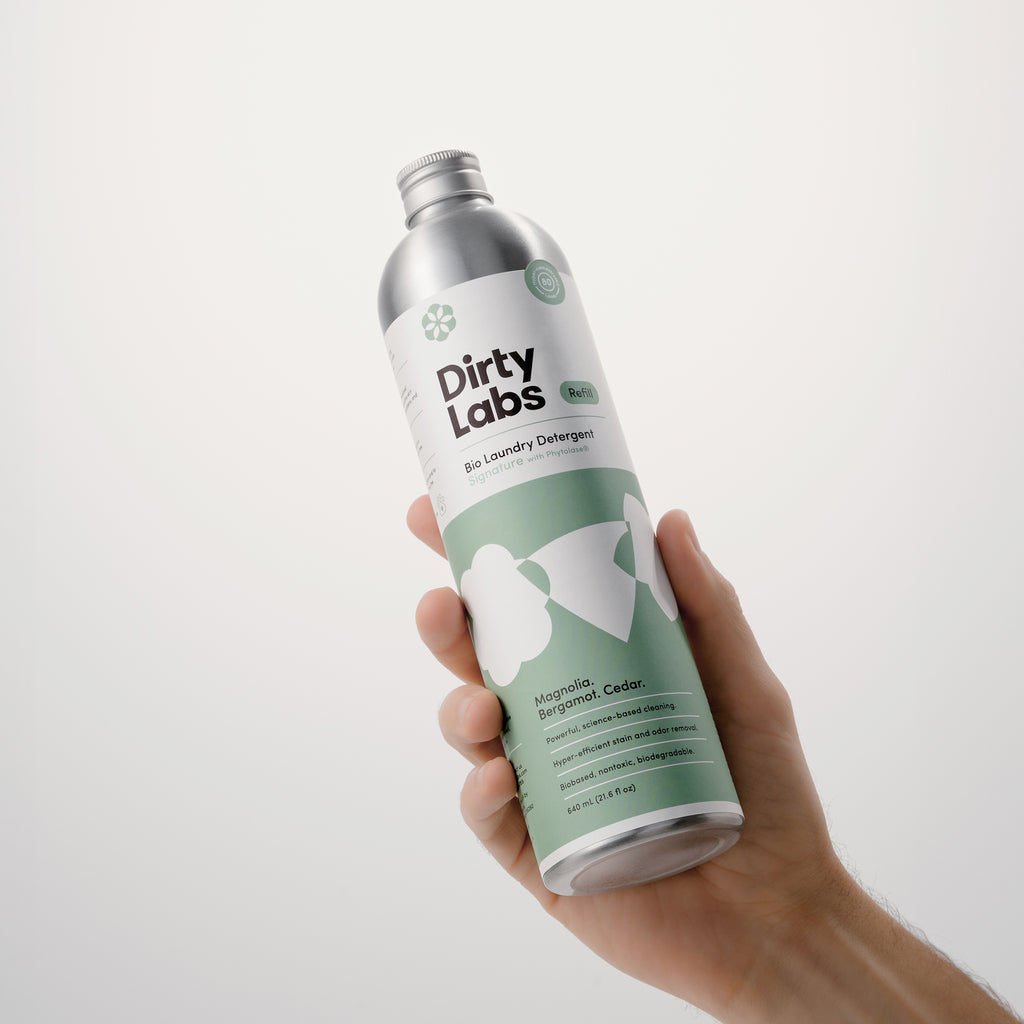
The Optical Brightener Myth: Why Your Laundry Doesn't Need Optical Illusions

The Optical Brightener Myth: Why Your Laundry Doesn't Need Optical Illusions

For decades, the laundry industry has been selling consumers a very particular promise: brighter whites, more vibrant colors, clothes that look newer for longer.

It sounds great…but the catch? Many detergents achieve that result without actually cleaning your clothes any better.

The secret is a class of chemicals called optical brighteners.

Despite the impressive-sounding name, optical brighteners don't remove stains, lift soil, preserve fabrics, or improve washing performance. Their entire job is to create the appearance of cleaner, brighter clothing through a visual trick.

In other words: they're not cleaning your laundry. They're tricking your eye.

What Are Optical Brighteners?

Optical brighteners (sometimes called fluorescent whitening agents or FWAs) are synthetic chemicals added to many conventional laundry detergents.

After a wash cycle, these compounds remain on your fabrics, creating a thin coating that absorbs ultraviolet (UV) light and re-emits it as visible blue light.

Why blue?

Because the human eye perceives a slight blue tint as "whiter" and "brighter." It's the same principle that makes some LED light bulbs feel cooler or brighter than others, even when they produce the same amount of light.

The result is that whites appear whiter and colors appear more vibrant — not because the fabric is actually cleaner, but because the optical brighteners are manipulating the way light reflects off the garment.

It's essentially a cosmetic effect for your laundry.

Do Optical Brighteners Actually Clean Clothes?

No.

Optical brighteners don't remove stains. They don't break down body oils. They don't eliminate odors. They don't help detergents lift dirt from fabric fibers.

Their purpose is entirely visual.

You can think of them as the laundry equivalent of a photo filter. The underlying fabric remains exactly the same, but the appearance is enhanced through an optical illusion.

This distinction matters because consumers often associate "brighter" with "cleaner."

The laundry industry has spent decades reinforcing that connection, even though the two things aren't necessarily related.

A shirt can appear brighter because it's coated with optical brighteners while still carrying detergent residue, embedded soils, or lingering odor compounds.

Likewise, a truly clean garment doesn't need fluorescent chemicals to prove it.

Why Dirty Labs Doesn't Use Optical Brighteners

At Dirty Labs, every ingredient must have a functional purpose.

If a chemical doesn't contribute to cleaning performance, fabric care, or a meaningful user benefit, it doesn't belong in our formulas.

Optical brighteners fail that test.

They're added to create the illusion of superior performance rather than improving performance itself.

Instead of relying on cosmetic tricks, we focus on what actually cleans clothes:

• Advanced bioenzymes that target stains at the molecular level
• Green chemistry that lifts soils without harsh petrochemicals
• Formulations designed to preserve fibers and extend garment lifespan
• Thorough rinsing that leaves fabrics clean and not “coated”

When your laundry comes out of the wash, we'd rather it be genuinely clean than artificially bright.

The Hidden Cost of "Brighter"

Here’s a few more reasons we're skeptical of optical brighteners: they encourage consumers to judge laundry by appearance alone, add unneeded chemical skin irritants, and some include microplastics that enter into our waterways.

Healthy textiles are fabrics that maintain their structure, softness, breathability, color integrity, and performance over time.

A detergent can make a white shirt look brighter today while doing very little to protect the garment's longevity.

In some cases, repeated chemical buildup can actually mask what's happening to the fabric underneath.

We don’t believe that’s true garment care. Instead, it’s camouflage.

Why Clothing Doesn't Need to Glow

The truth is that most of us have been conditioned to think clean clothes should almost glow.

We've been taught that ultra-bright whites are a sign of cleanliness, even though that brightness is often engineered through dyes, coatings, brighteners, and other cosmetic additives.

Real cleanliness removes soils instead of covering them up, preserves fabrics instead of disguising wear, and relies on chemistry that performs a function rather than chemistry that performs a trick.

Want to test if your detergent has optical brighteners hidden within it? Put your clothes under a black light. If it glows, there’s your answer.

The Bottom Line

Optical brighteners are one of the laundry industry's oldest sleights of hand.

They make fabrics appear brighter by manipulating light — not by cleaning more effectively.

At Dirty Labs, we believe detergent should earn its results honestly. That's why you'll never find optical brighteners in our formulas.

Your laundry deserves actual cleaning, not an optical illusion.